Weather
The sky out here does not do gentle.
Key
subtitle = timing / season
Monsoon Season
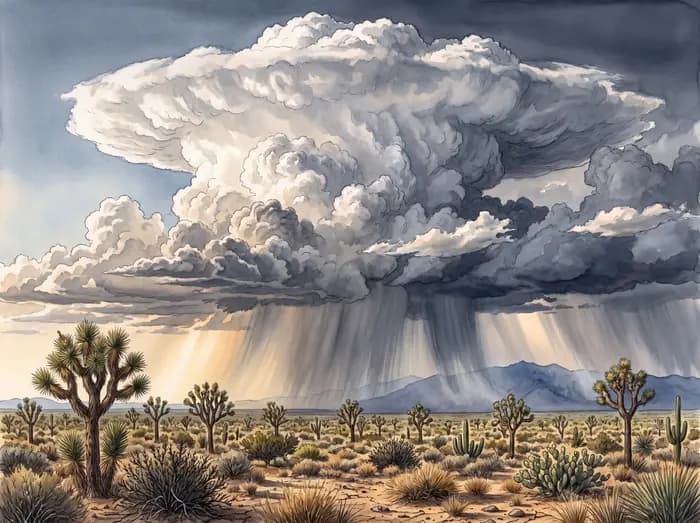
North American Monsoon
July–September
The desert's second rainy season. The winter rain comes from the west; the summer monsoon comes up from the south, around the rain shadow, in violent local storms from July into September.
Read more →
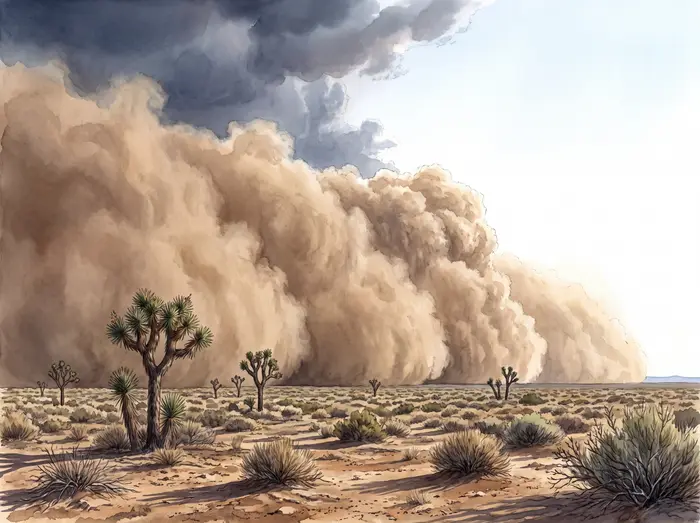
Haboob
Monsoon, ahead of storms
A wall of dust over half a mile high, driven ahead of a monsoon thunderstorm. It is the storm's cold outflow made visible — and it arrives before the rain, so the dust is the warning.
Read more →
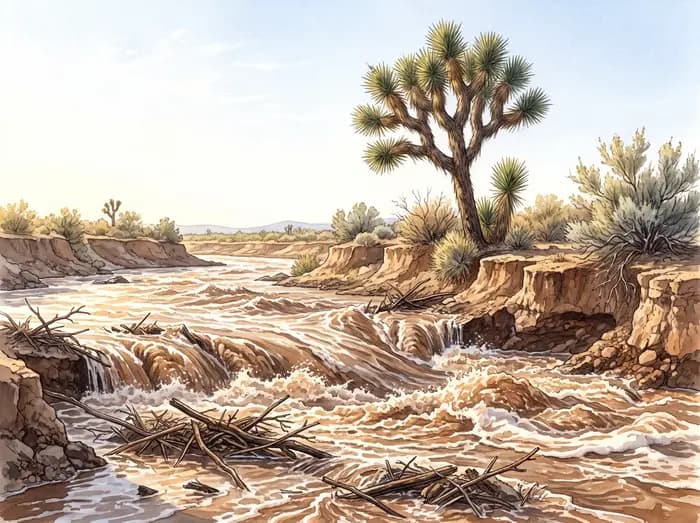
Flash flood
Monsoon
The desert's deadliest weather. A dry wash goes from dust to torrent in minutes, often from a storm miles away under a clear sky overhead. Never drive into flowing water.
Read more →
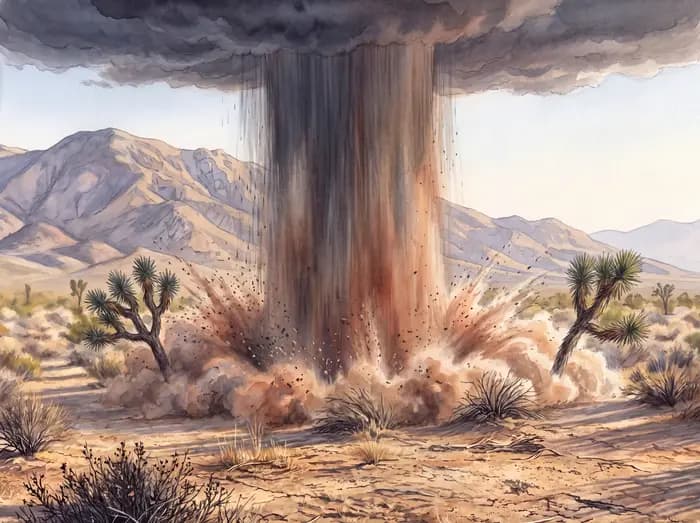
Microburst
Monsoon
A violent column of air that drops out of a thunderstorm and slams the ground, then blasts outward in all directions — up to 60 mph, less than 2.5 miles across, over in minutes.
Read more →
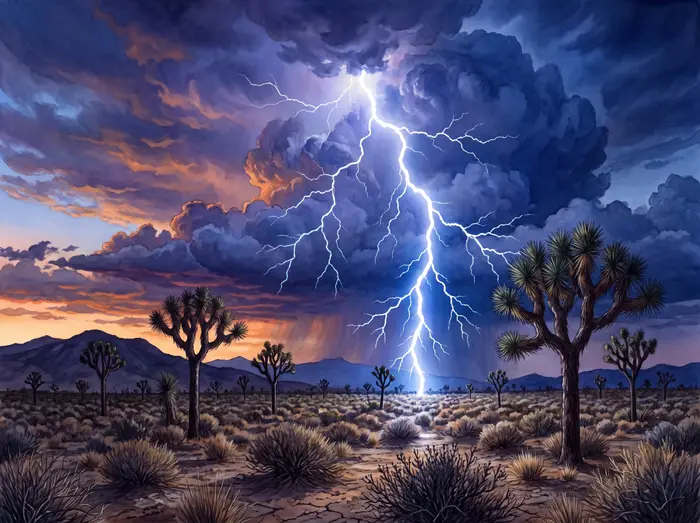
Lightning
Monsoon
Monsoon storms make it, and the desert's flat open ground makes you the tall target. Dry lightning — a strike with little or no rain — is the region's leading natural fire starter.
Read more →
Heat & Cold
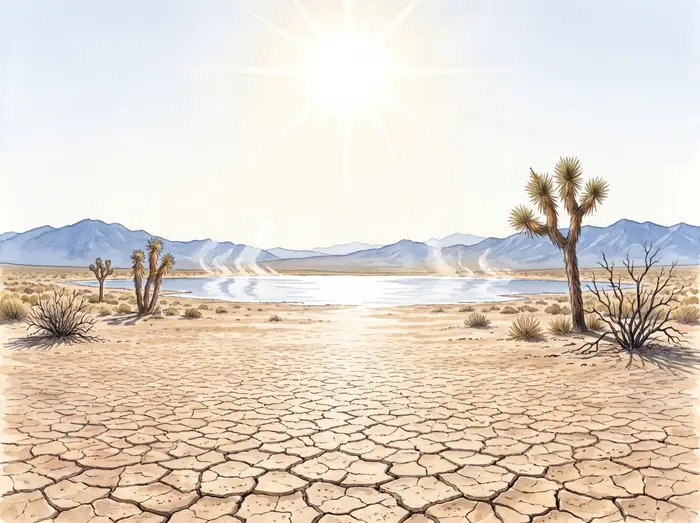
Extreme heat
June–August
The desert's summer hazard is the length and the dryness, not just the number. Dry, cloudless air lets the sun arrive unfiltered — and the shimmering 'lake' on the flat is refraction, not water.
Read more →
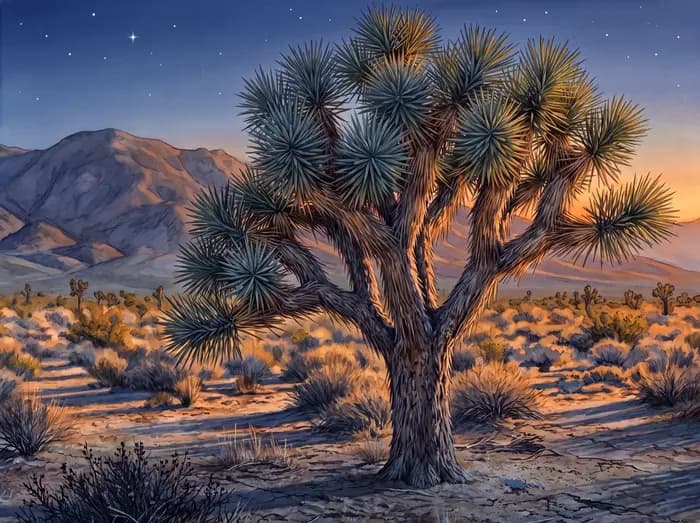
Diurnal swing
Year-round
The desert broils by afternoon and chills hard by dawn — dozens of degrees in a day. Dry, cloudless air is the missing blanket, and cold air drains downhill to pool on the flat at night.
Read more →
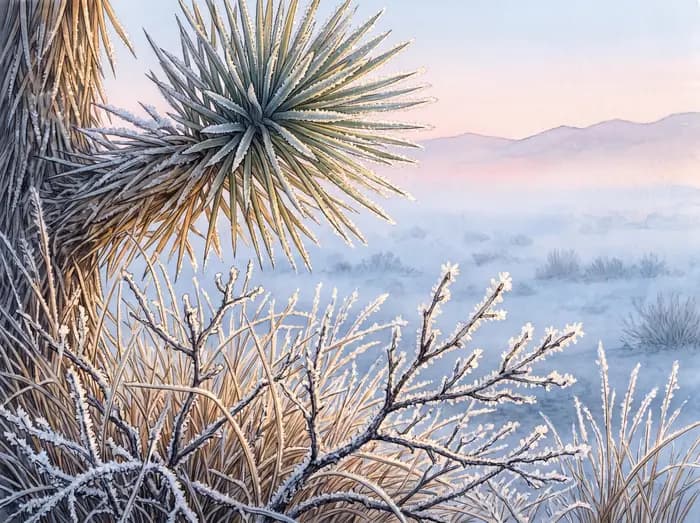
Frost & freeze nights
November–February
A high desert freezes. On clear winter nights the ground radiates its heat to space, and cold air drains down to pool on the flat — so frost pockets the low ground while the slope stays warmer.
Read more →
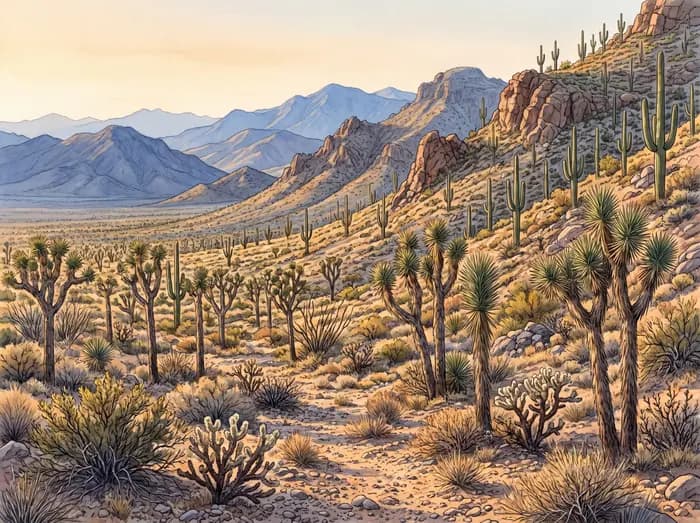
The one number we cannot give you
The nighttime minimum
By day we can carry the station's temperature over to this land. At night we cannot — the air decouples, and lower stops meaning warmer. But the saguaros have been measuring it for a century.
Read more →
Air & Sky
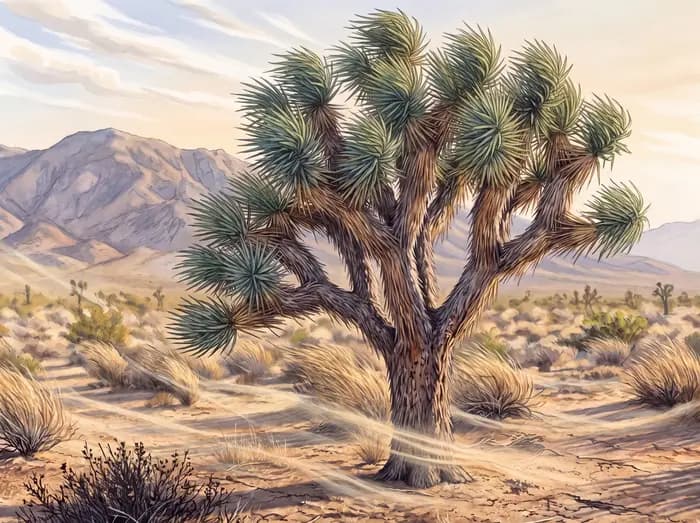
Wind regime
~7–10 mph average
Open desert gives wind a clear run. You read it by its effects — combed plants, blown sand, dust plumes — and it is a drying force as much as a moving one, pulling water from soil and leaf.
Read more →
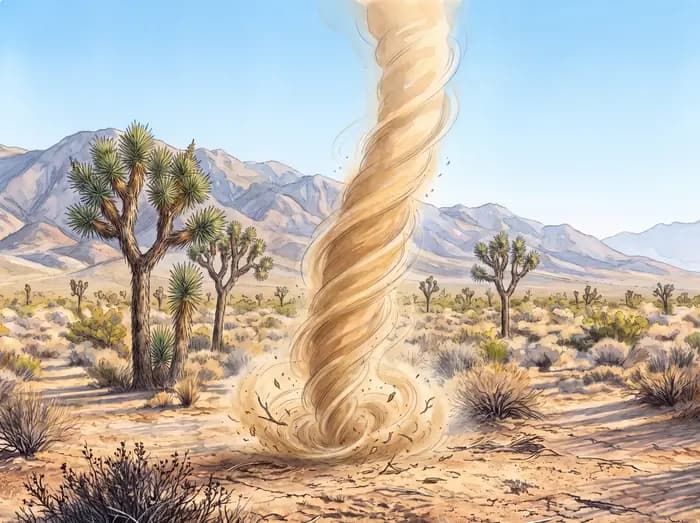
Dust devil
Spring–summer afternoons
A spinning column of dust that rises off hot ground on a clear, calm day — no storm needed. It is the opposite of a tornado: built from the ground up by heat, not down from a cloud.
Read more →
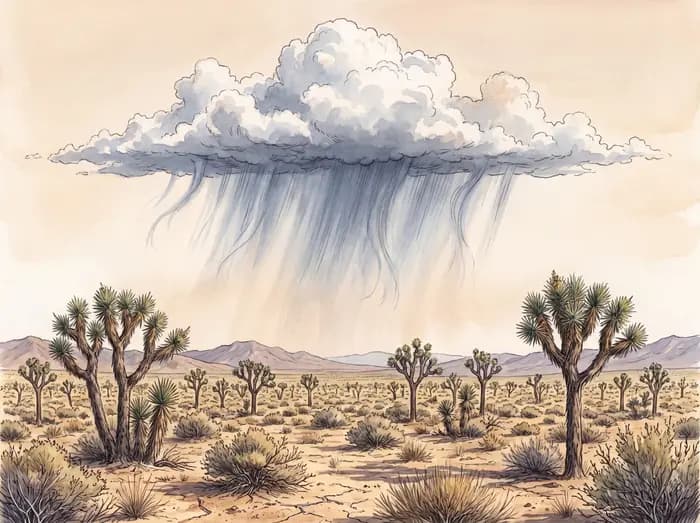
Virga
Year-round
Rain that falls from a cloud and evaporates before it lands: grey streaks trailing beneath it, fading in a clear gap above dry ground. Much of the desert's rain ends this way.
Read more →
The Big Picture
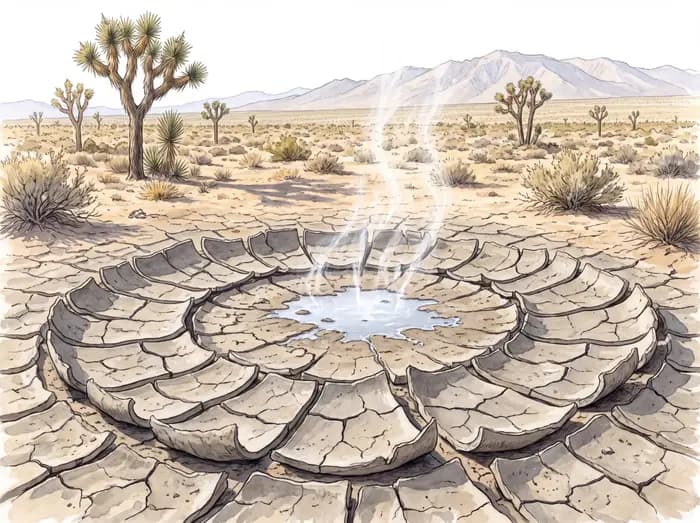
Aridity & evaporation
The baseline condition
A desert is defined not just by little rain but by the air wanting far more water than the sky delivers. Evaporation is a builder too — it concentrates the salts and minerals the rain leaves behind.
Read more →
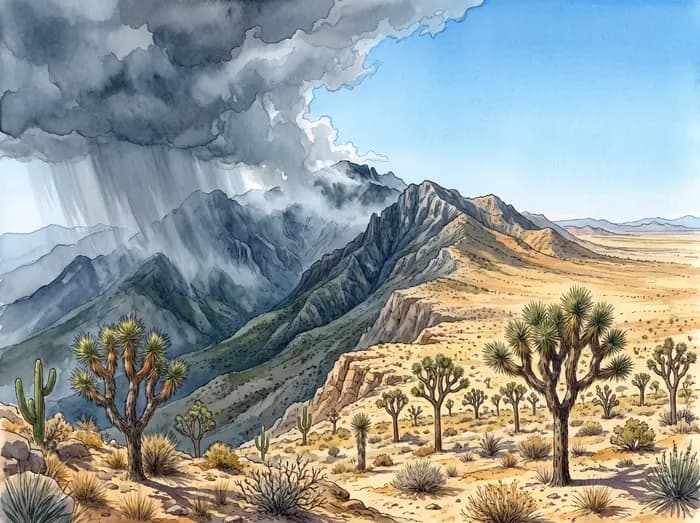
Rain shadow
Why it's dry at all
The ranges west wring the Pacific storms dry before they reach you. But the monsoon comes from the south, around the shadow — so this desert gets two rain seasons, not one.
Read more →