Stone & Ground
What the land is made of, and what it will let you build on.
Key
subtitle = formula / landform type
Minerals
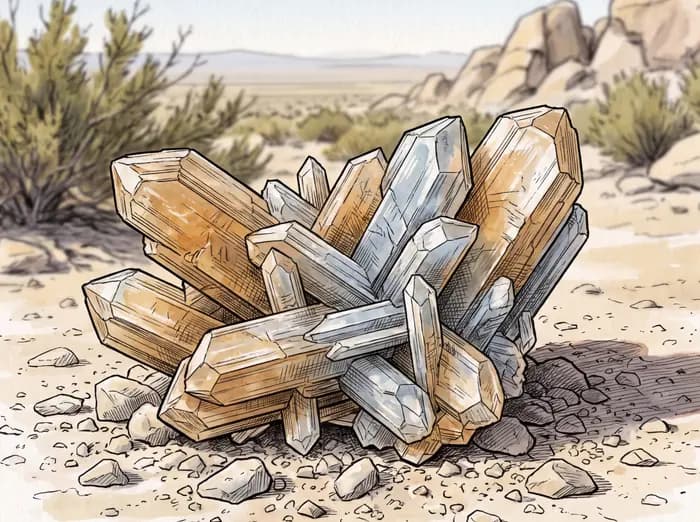
Barite
BaSO₄ — barium sulfate
Startlingly heavy for a dull pale rock — that dead weight is the whole mineral. Barium sulfate, ground into drilling mud to weight oil wells; the stone Barito is named for.
Read more →
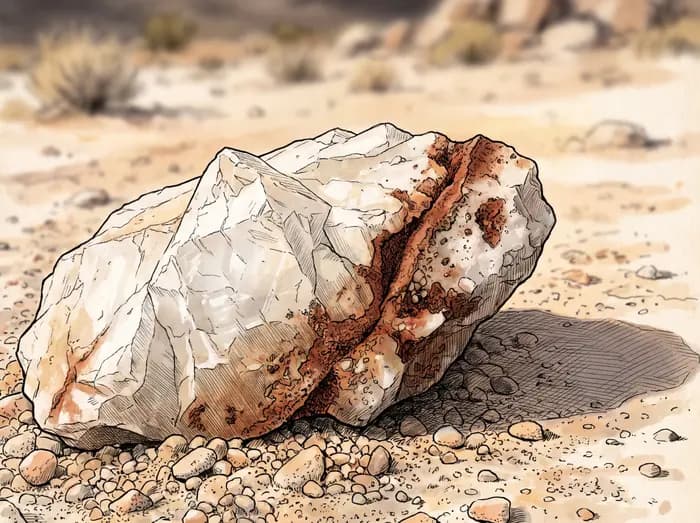
Quartz
SiO₂ — silica
The stubborn survivor that outlasts granite itself: silicon dioxide, hardness 7 — it scratches glass and shrugs off a knife. Most of the pale sand on the bajada is quartz and little else.
Read more →
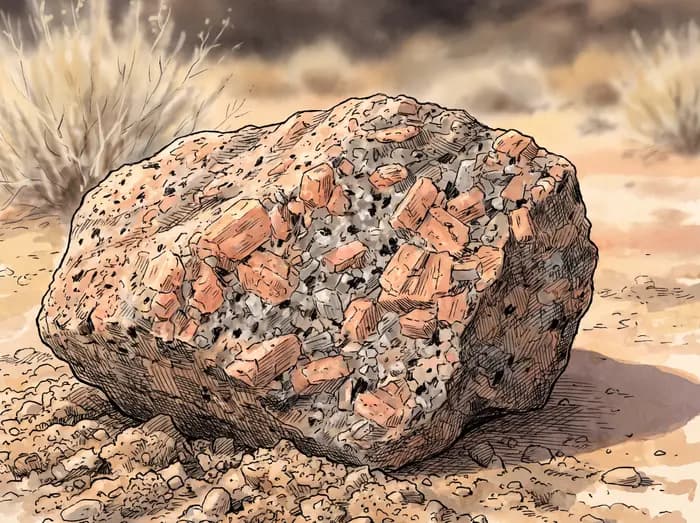
Feldspar
Pink grains in granite
The most abundant mineral in Earth's crust, and the pink in every granite boulder. Feldspar rots to clay while the quartz beside it survives as sand, the split that makes the desert's soil.
Read more →
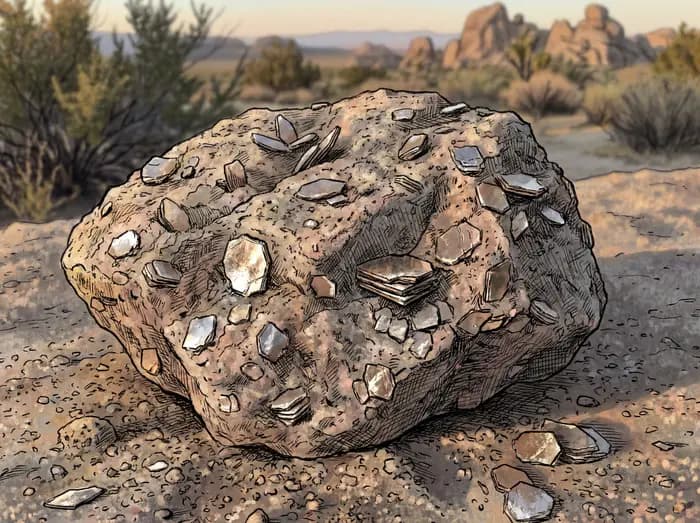
Mica
Flaky, shiny flecks
The desert's glitter and its oldest false gold — really granite coming apart. Sheet-silicate minerals that peel into thin, springy, near-transparent films under a fingernail.
Read more →
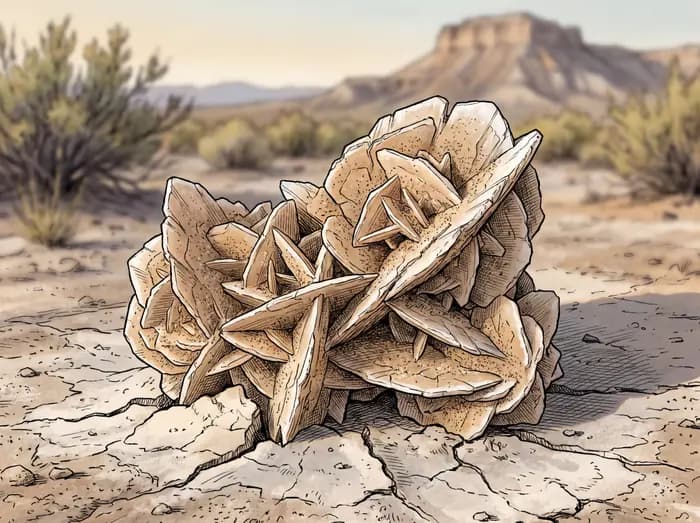
Gypsum
CaSO₄·2H₂O — soft white
The softest common stone — a fingernail marks it, Mohs 2. Hydrous calcium sulfate: clear selenite, silky satin spar, or a sand-filled desert rose weathering out of a clay cutbank.
Read more →
Rock Types
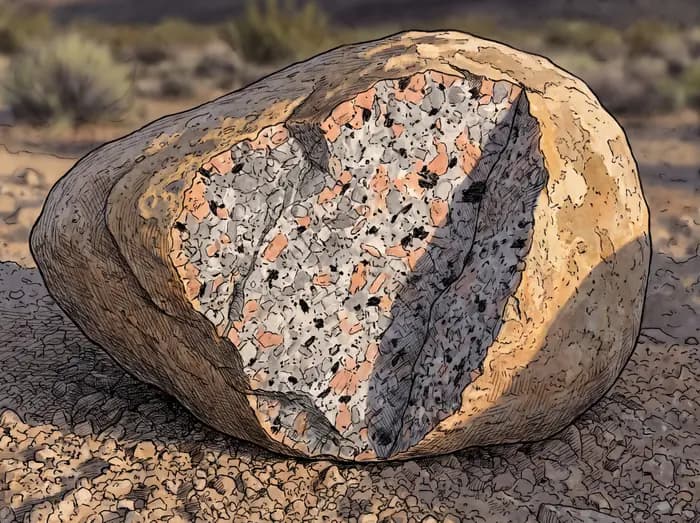
Granite & decomposed granite
Igneous — the ranges & the 'DG'
The mountain caught mid-crumble: cooled slow and deep, so its quartz and feldspar grew into big visible crystals — and now it sheds them grain by grain into the gritty 'DG' underfoot.
Read more →
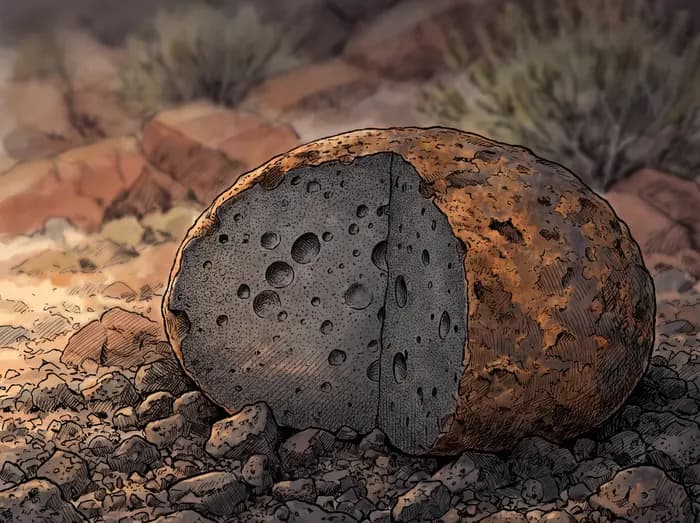
Basalt
Dark volcanic rock
A dark, dense, fine-grained lava rock with no crystals you can see. That blankness is the tell: it froze fast at the surface, where granite cooled slow and deep.
Read more →
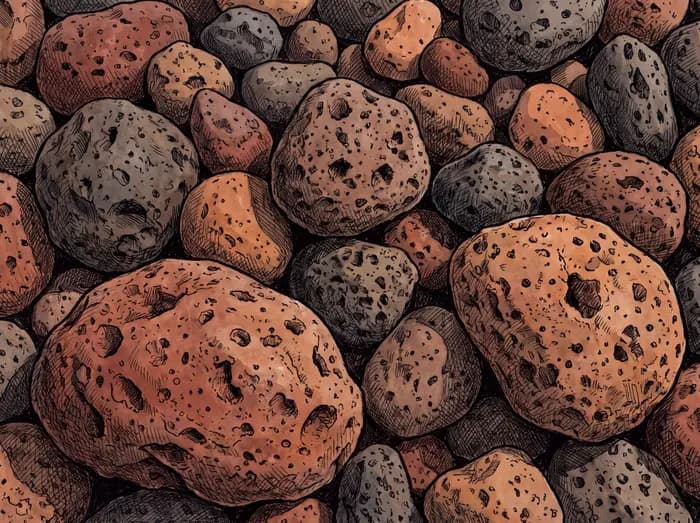
Volcanic cinder / scoria
Red, porous — 'lava rock'
A dark volcanic rock so full of frozen gas bubbles it is startlingly light and rough. The holes are the tell: it is basalt that erupted frothy. Cinder and scoria are the same thing.
Read more →
Ground & Crust
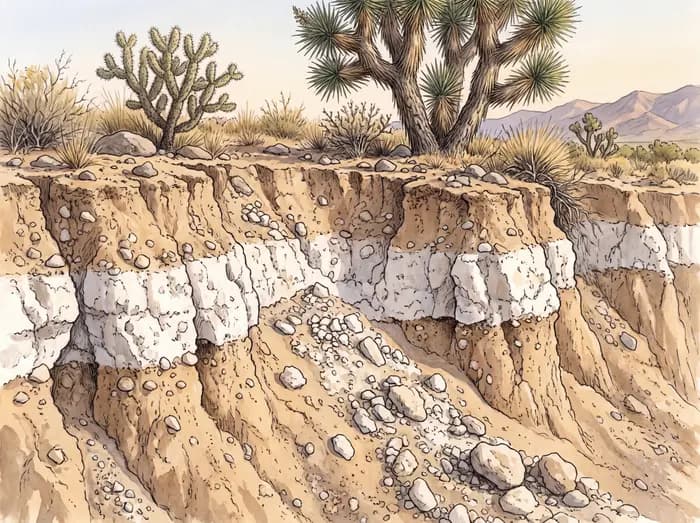
Caliche
CaCO₃ hardpan layer
The pale hardpan a shovel and a post auger both hit. Rain carries calcium down but can't flush it out, cementing a layer at the exact depth the water reaches: a rain gauge frozen in the ground.
Read more →
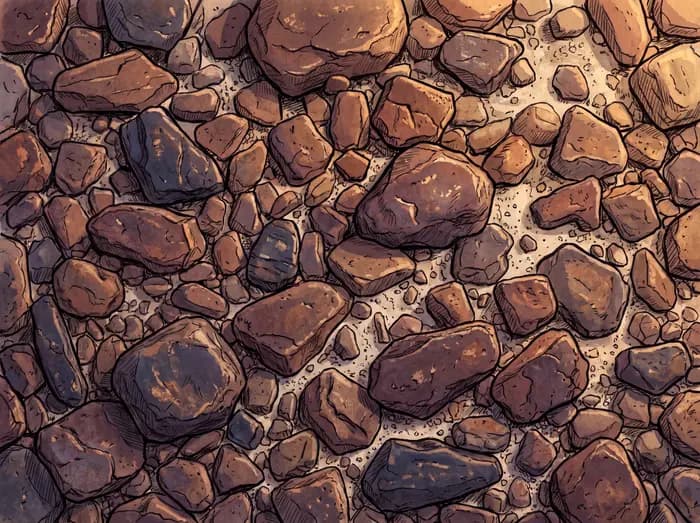
Desert pavement
Gravel-armored surface
The stones were there first: wind-blown dust sifts down beneath them and lifts the mosaic. Tens of thousands of years to set, and a tire scar that won't re-armor in a lifetime.
Read more →
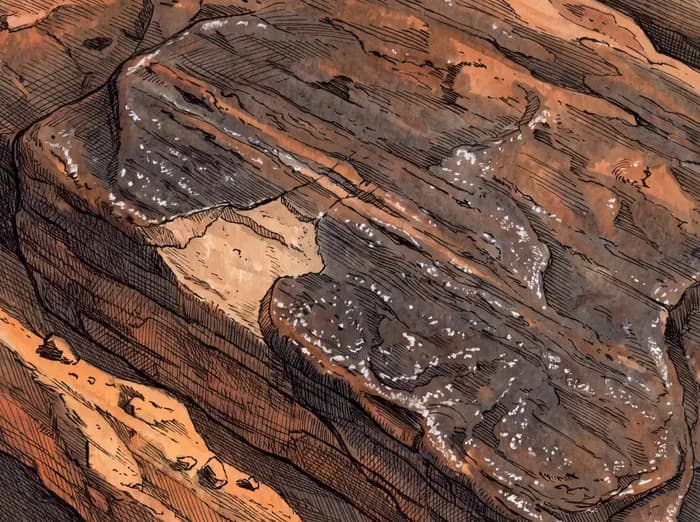
Desert varnish
Manganese / iron coating
The dark sheen on long-sitting desert rock isn't rust from the stone — it's dust from the sky, manganese and clay pinned on over millennia. Snap one open: the inside is pale.
Read more →
Landforms
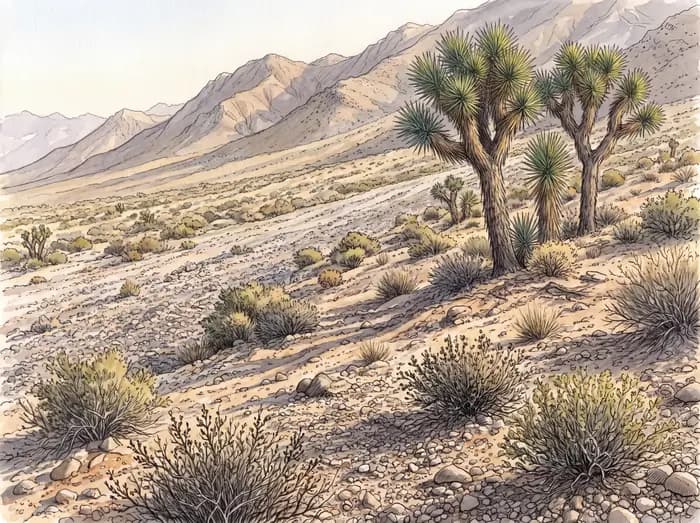
Bajada
Coalesced alluvial slope
It reads as flat ground and isn't — a bajada is a gentle slope of merged alluvial fans, sorted coarse-to-fine by flash floods. Learn the tilt and you can read where the water goes.
Read more →
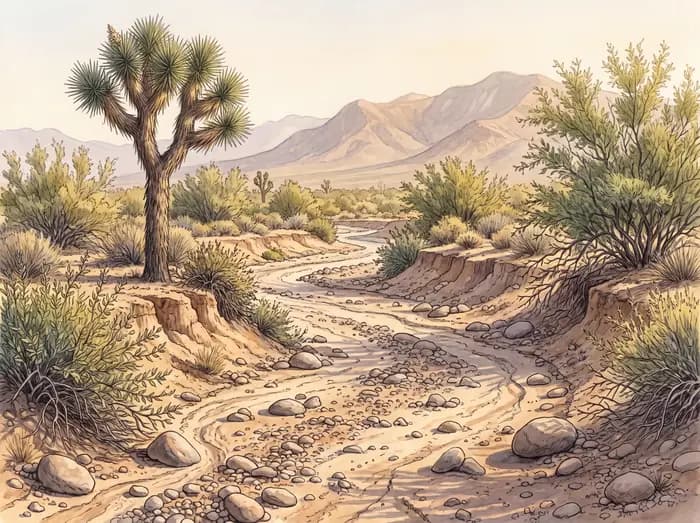
Wash / arroyo
Dry channel — flash-flood path
From wetter country a wash reads as a river that failed. It isn't — it's the desert's plumbing, dry between floods, and the green thread where the country keeps its life.
Read more →
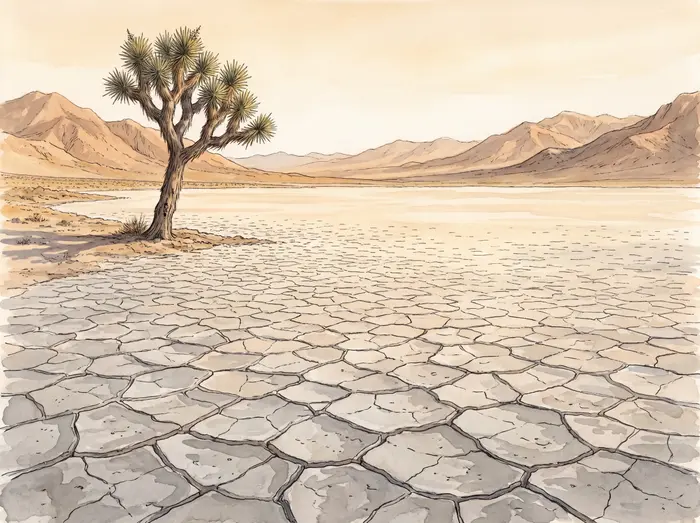
Playa
Dry-lake silt flat
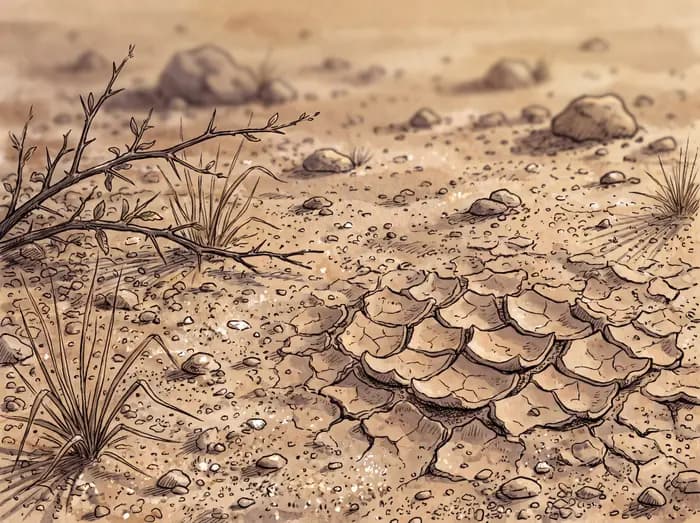
The dead-flat, cracked clay floor at the bottom of a closed basin — a dry lake that briefly floods, then evaporates to hardpan and salt. It is where the bajada's finest dust ends up.
Read more →