Birds
Raptors overhead, quail underfoot, and a raven judging you.
Key
subtitle = binomial (scientific name)
Raptors, Owls & Large
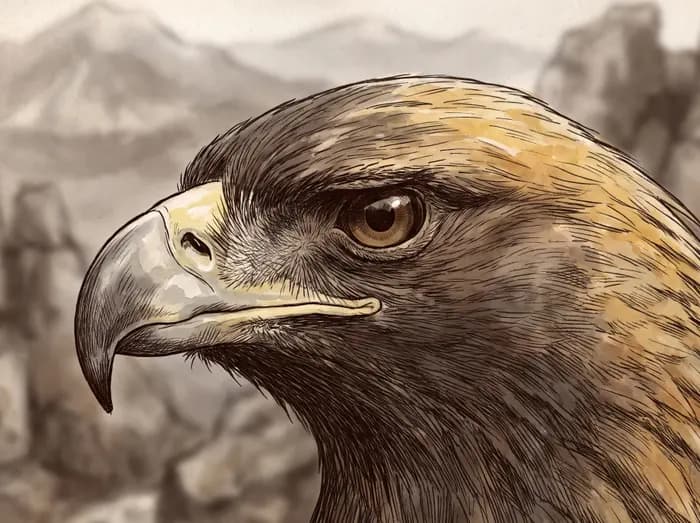
Golden eagle
Aquila chrysaetos
The famous eyes are twice a human's, not ten times, and the tested bird was a cousin. Twice is enough to read jackrabbits off the open desert all afternoon; the dive speed was never measured.
Read more →
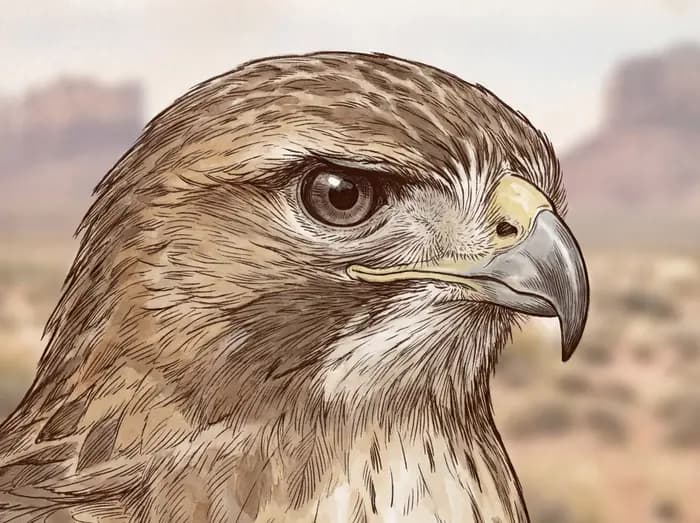
Red-tailed hawk
Buteo jamaicensis
The movie-eagle scream is really this hawk, dubbed over the eagle's thin real voice. The commonest hawk on the continent, riding lift the desert heat builds for free.
Read more →
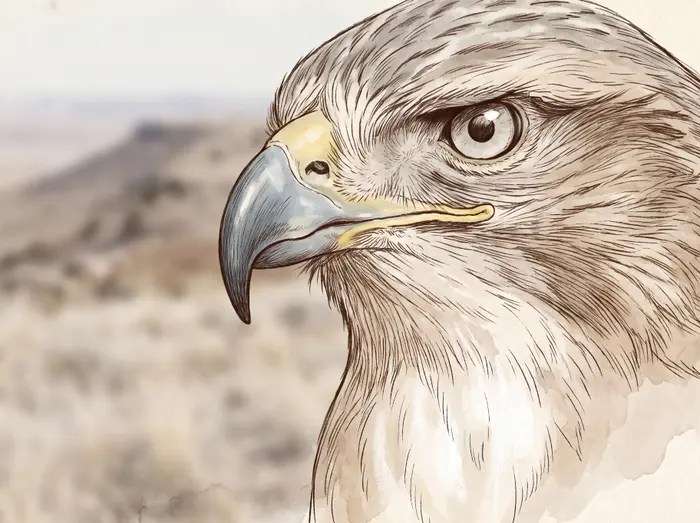
Ferruginous hawk
Buteo regalis
North America's largest hawk, yet only a winter guest: it breeds high and north and drops down here for the cold. Feathered to the toes like an eagle; overhead, a rusty V on a near-white bird.
Read more →
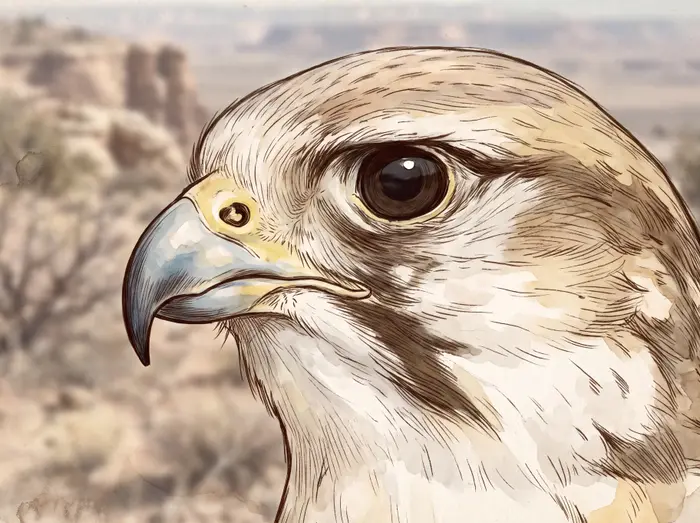
Prairie falcon
Falco mexicanus
Filed next to the peregrine for a century; the genomes put it on its own branch. It hunts flat and low, arriving inside a flock's reaction time, or climbing into it from below.
Read more →
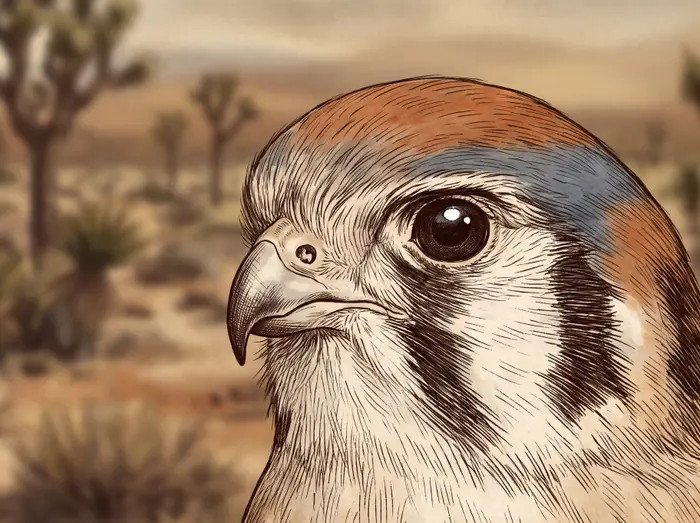
American kestrel
Falco sparverius
Watch it hunt into the wind and everything works but the head, which hangs locked in the air: the eyes held still to read the ground. The commonest falcon, quietly vanishing.
Read more →
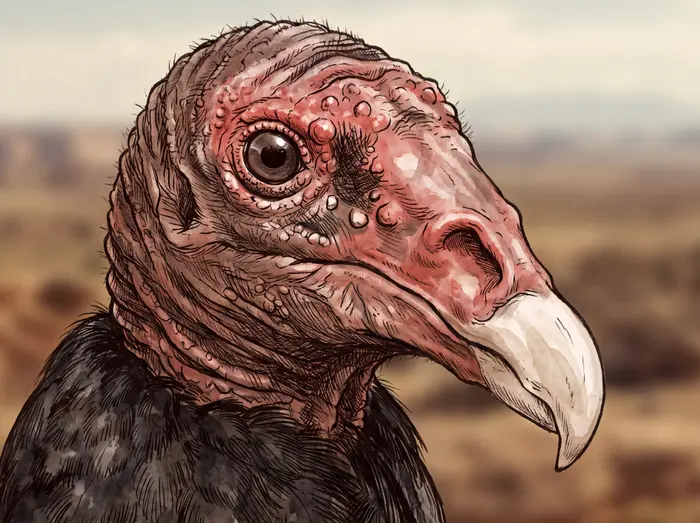
Turkey vulture
Cathartes aura
Finds a hidden carcass by smell, and won't take a fresh kill, only a day-old one. A summer bird here that clears south for winter; the tell overhead is a teetering, shallow V.
Read more →
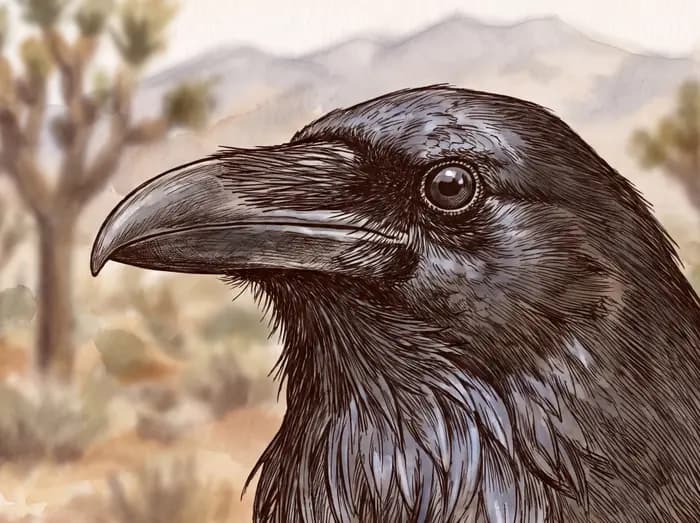
Common raven
Corvus corax
Named for its croak, but the mind is the story: it plans hours ahead and remembers a fair trade a month on. Human subsidies have pushed Mojave numbers up over 700%, and the young tortoise pays.
Read more →
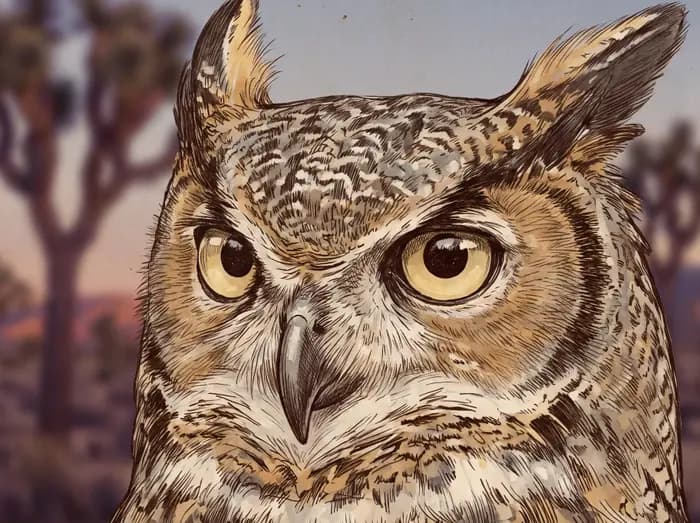
Great horned owl
Bubo virginianus
You will hear it before you see it, if you meet it at all. Not the barn owl that hunts in true dark by sound; this one needs light, steals a hawk's nest, and regularly kills skunks.
Read more →
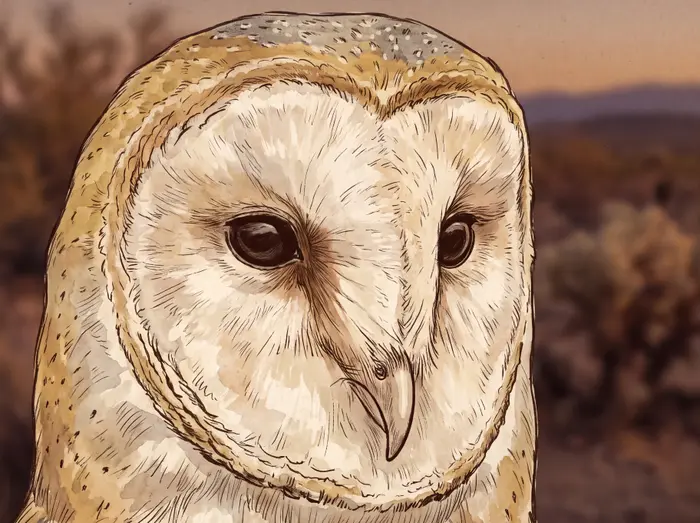
Barn owl
Tyto alba
It doesn't hoot, it screams. In total darkness it catches a mouse by sound alone, aim under two degrees off, and a single nest box clears six to nine hundred rodents from this ground in a season.
Read more →
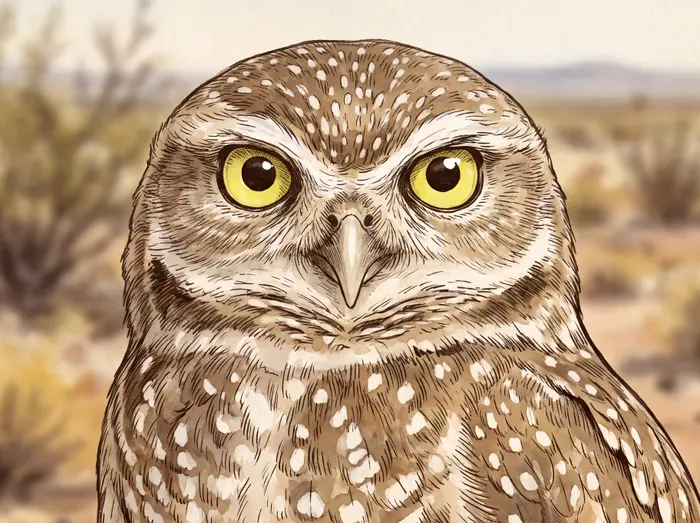
Burrowing owl
Athene cunicularia
For years the dung at its burrow was read as camouflage. Tested, it proved to be bait: it draws beetles, and beetles are food. A day-hunting owl that squats in a hole it did not dig.
Read more →
Quail, Doves & Roadrunner
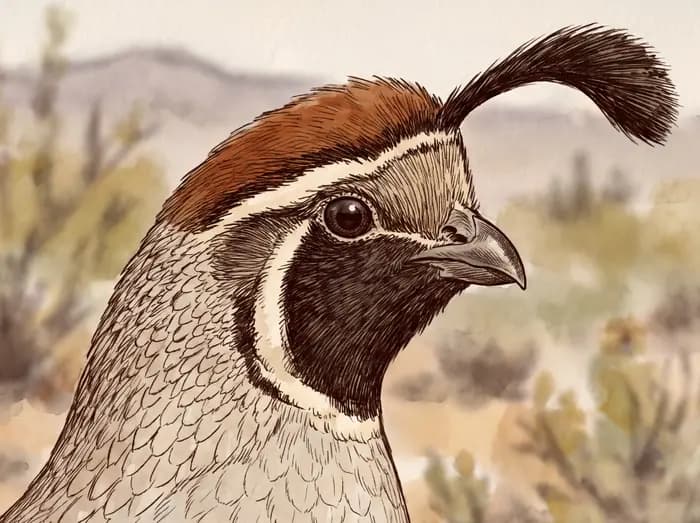
Gambel's quail
Callipepla gambelii
A wet winter greens the forbs and the quail breed hard, a clutch of 10 to 12; a dry one and they barely bother. Why is still argued, and the famous plant-signal study was run on a different quail.
Read more →
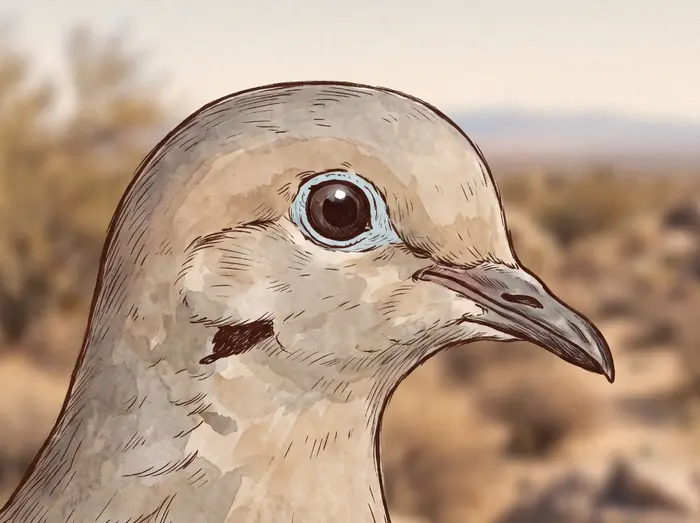
Mourning dove
Zenaida macroura
A seed-eater that still drinks nearly every day, head down and pumping the way the whole pigeon family does. Its whistling wings are a real alarm, and other birds have learned to read it.
Read more →
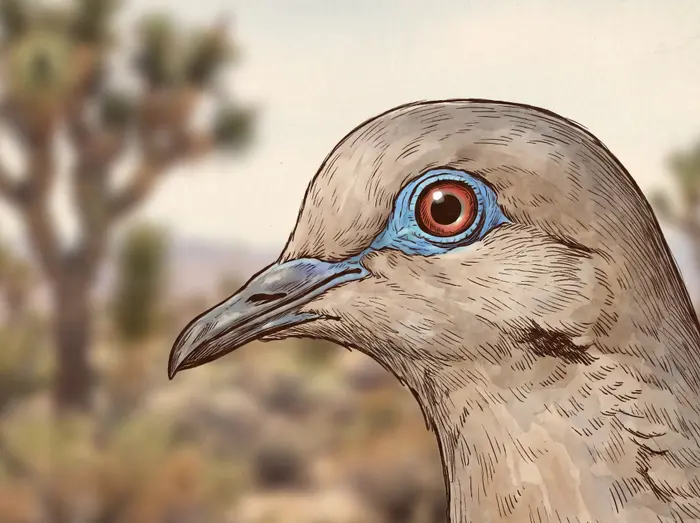
White-winged dove
Zenaida asiatica
In Sonoran country it's nearly made of saguaro, half its summer diet. None grows here at 3,050 ft, so it's a plain summer seed-eater whose who-cooks-for-you call fools you into hearing an owl.
Read more →
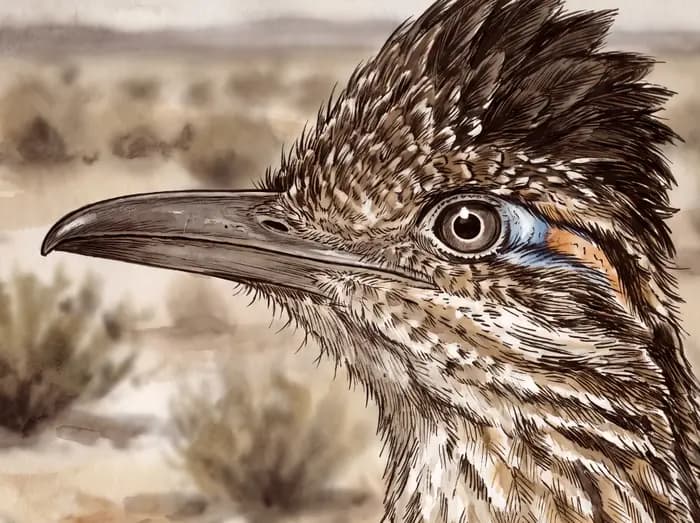
Greater roadrunner
Geococcyx californianus
It lets its body go cold on the desert night to save fuel, then unfolds a patch of black back-skin at sunrise like a solar panel to warm up. It would rather run than fly.
Read more →
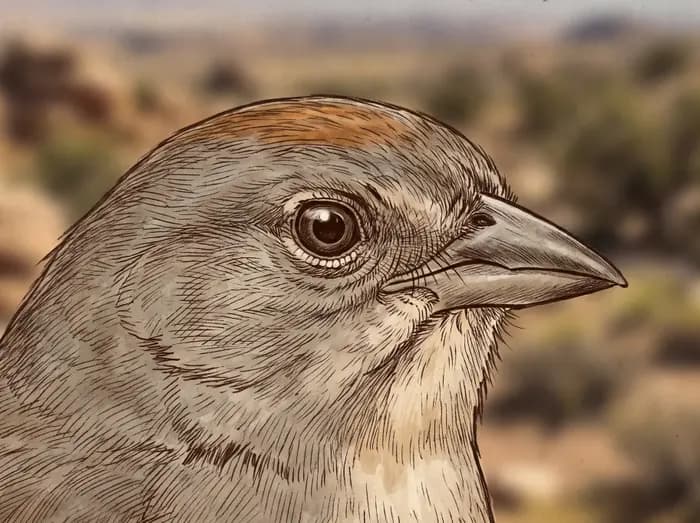
Canyon towhee
Melozone fusca
A plain ground sparrow that never leaves: one pair, one rocky patch, year-round. It feeds by a two-footed backward kick and keeps its bond with a squealing duet.
Read more →
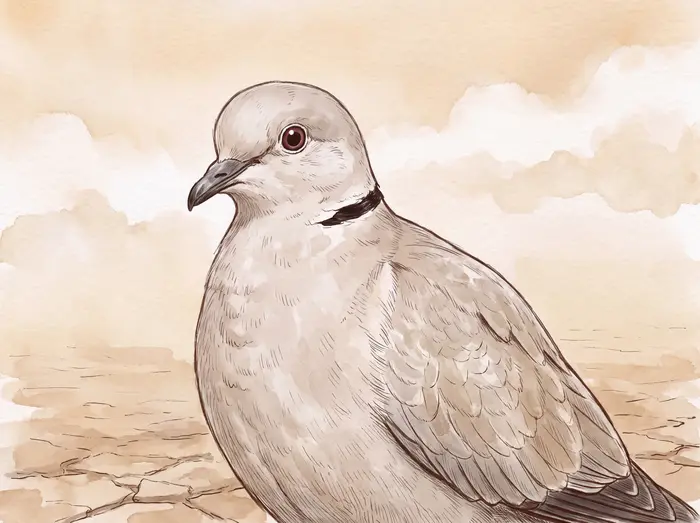
Eurasian collared-dove
Streptopelia decaocto
Here because of a pet-shop burglary in the Bahamas in 1974. The one bird in this guide that arrived with people, and the only one wearing a black half-collar.
Read more →
Songbirds
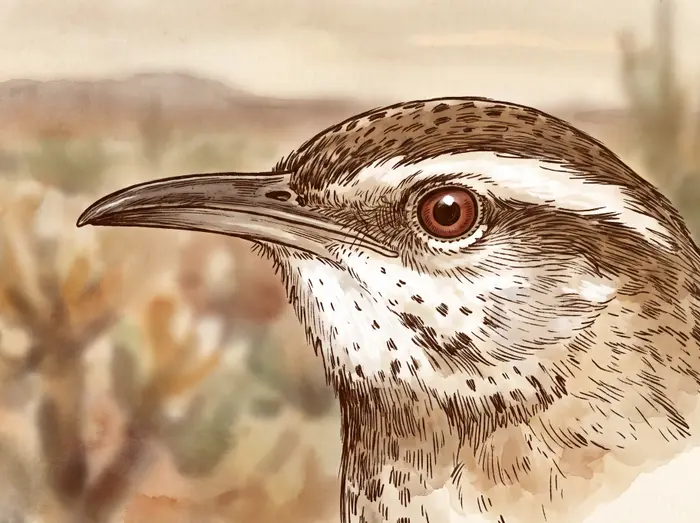
Cactus wren
Campylorhynchus brunneicapillus
Several football-shaped nests crowd one cholla, but only one holds eggs. The rest aren't decoys, whatever you're told. They're bedrooms: it sleeps indoors every night, all year.
Read more →
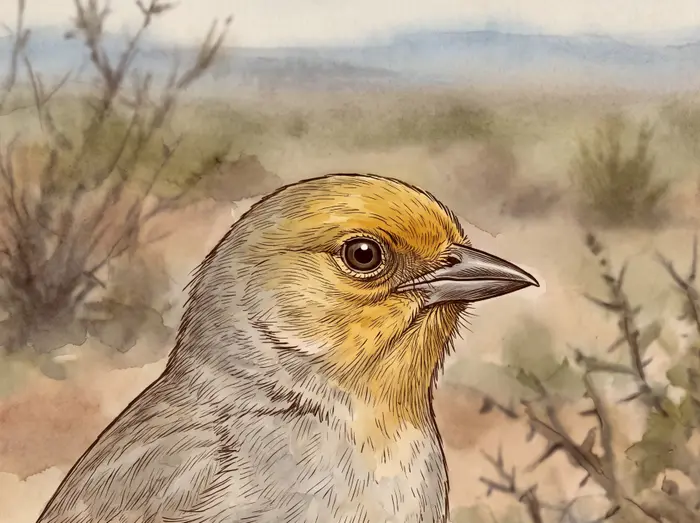
Verdin
Auriparus flaviceps
Seven grams of songbird, squeezed by cold nights and dry summer heat at once. It can't change its body, so it builds thick-walled roost nests and sleeps inside them through the cold.
Read more →
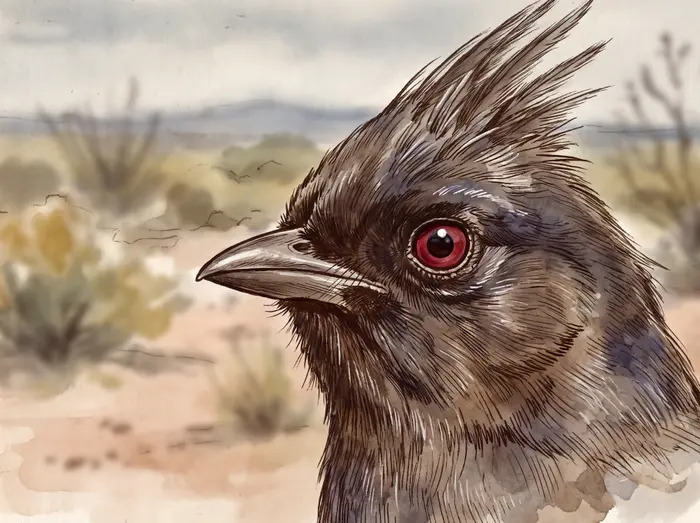
Phainopepla
Phainopepla nitens
For half the year it eats one thing: desert mistletoe. A weak little gizzard peels the berries inside the bird, then plants the seeds on the branch — parasite and disperser in one.
Read more →
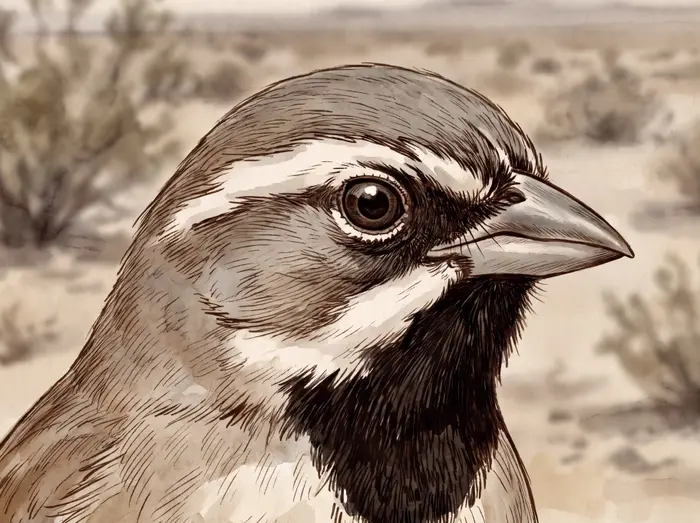
Black-throated sparrow
Amphispiza bilineata
The tidy story says it never drinks. At a desert spring, researchers watched it hit the water 143 times in one day, then quit the week rain greened the ground.
Read more →
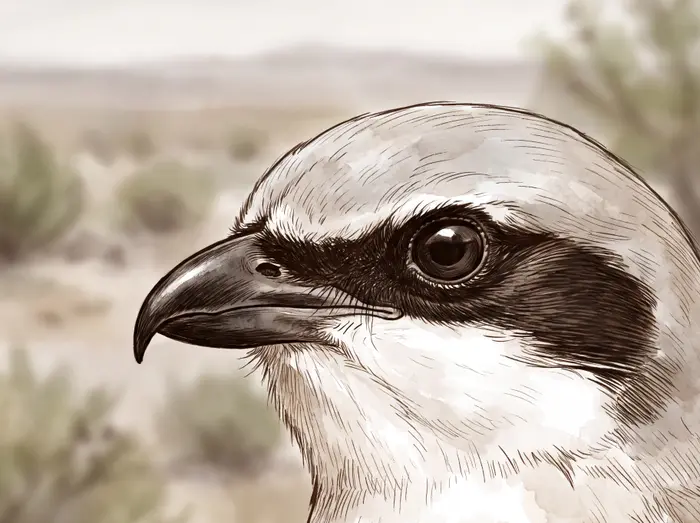
Loggerhead shrike
Lanius ludovicianus
A songbird that does a hawk's work without a hawk's feet: it can't grip, so it kills by a whiplash head-spin and hangs its prey on thorns. The talon it was never issued.
Read more →
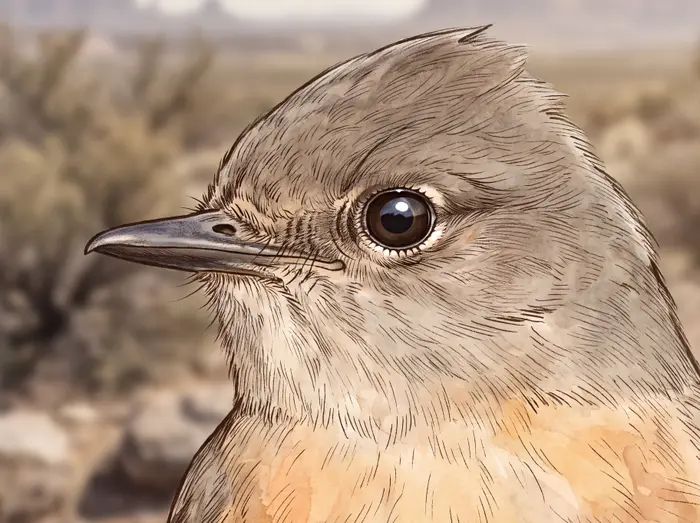
Say's phoebe
Sayornis saya
The phoebe that gave up water: its cousins cling to streams, but this one lives far from any, asking a nest site only for shelter from above. A porch beam is a cliff.
Read more →
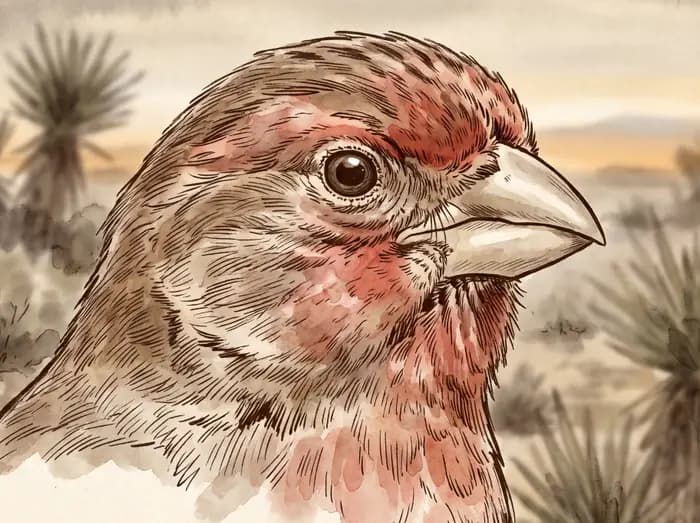
House finch
Haemorhous mexicanus
His red isn't his, it's food: a male house finch grows in whatever pigment he ate while molting, so the color is a receipt from last autumn, and the females read it before they choose.
Read more →
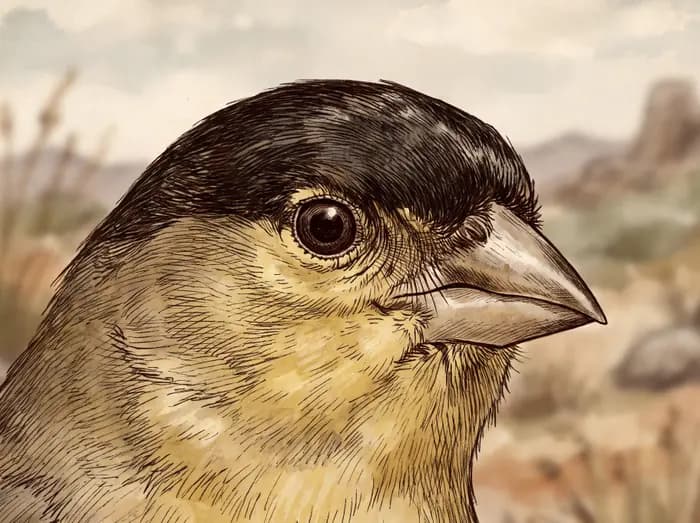
Lesser goldfinch
Spinus psaltria
A seed is bone dry, and it eats little else, so this seed specialist has to live near water. His song is stitched from the neighbors: Arizona birds copy the Gila woodpecker.
Read more →
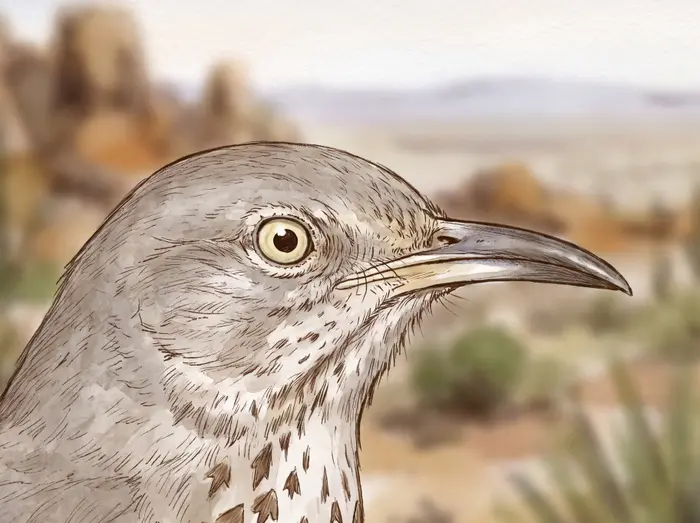
Bendire's thrasher
Toxostoma bendirei
Arizona holds half the world's Bendire's thrashers, and still nobody has timed how long it sits its eggs. A plain grey-brown ground-forager, vanishing fast, easy to miss for its commoner cousin.
Read more →
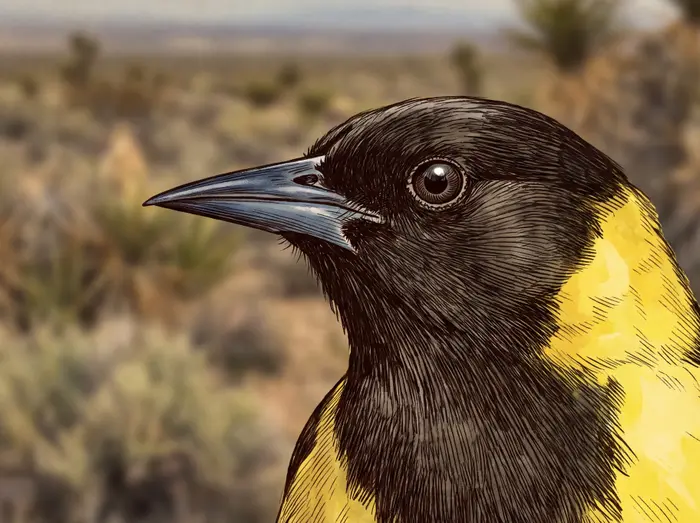
Scott's oriole
Icterus parisorum
Its nest is woven from the yucca it hangs in: strips of dried leaf-fiber set deep among the spines. No yucca, no oriole. A summer bird here; both sexes sing a meadowlark's fluting whistle.
Read more →
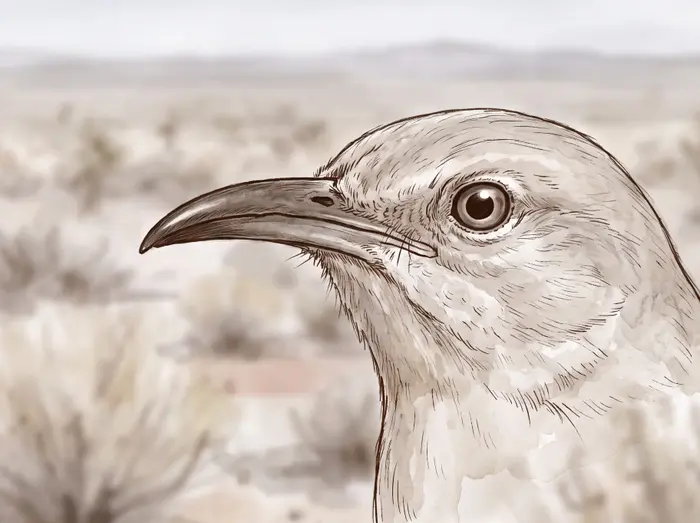
LeConte's thrasher
Toxostoma lecontei
The palest of the North American thrashers, colored like bare dirt. It needs the emptiest ground of almost any songbird, runs instead of flying, and drinks only its prey.
Read more →
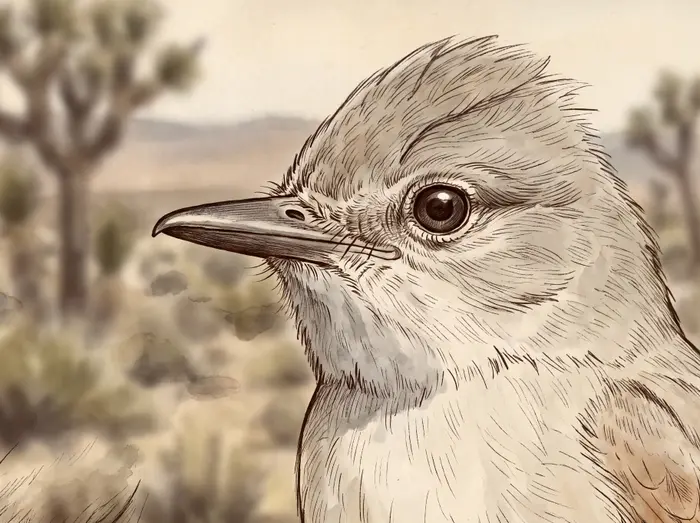
Ash-throated flycatcher
Myiarchus cinerascens
It breeds in desert scrub without drinking, taking its water from the insects it catches, then squats in a hole it can't dig, from a woodpecker's to a mailbox.
Read more →
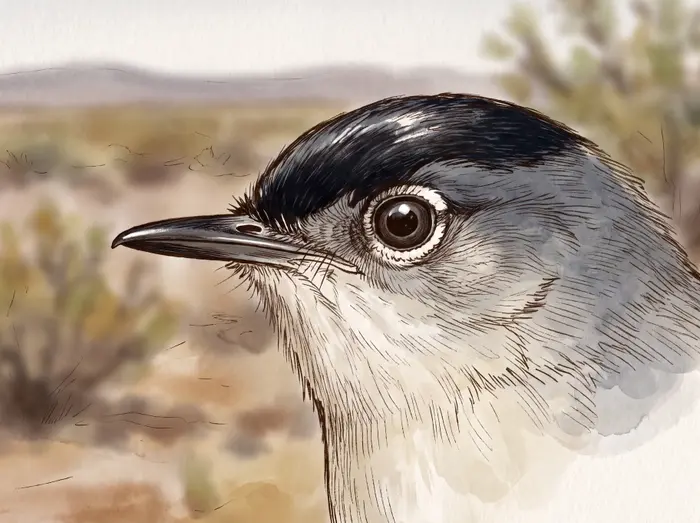
Black-tailed gnatcatcher
Polioptila melanura
Two look-alike gnatcatchers share the scrub; one migrates, one never does. The black-tailed stays year-round on water squeezed from the bugs it eats. The tell is the tail from below.
Read more →
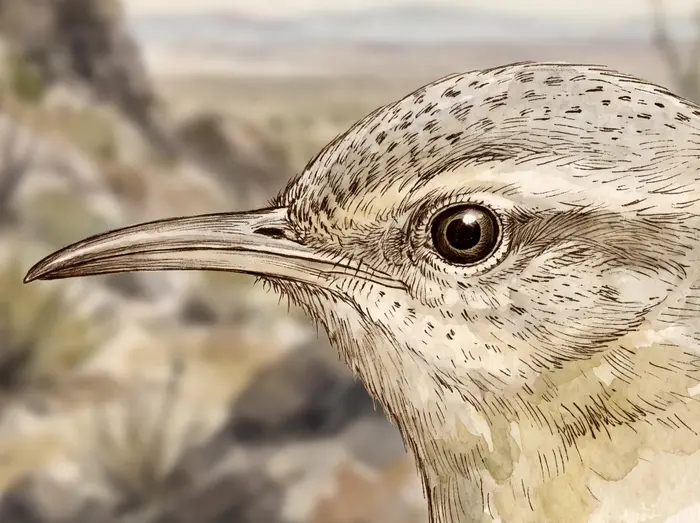
Rock wren
Salpinctes obsoletus
A half-ounce bird hauls up to 1.4 kg of flat stones into a paved doorstep at its nest. The one tested reason it holds up: drainage. It also seems never to drink water.
Read more →
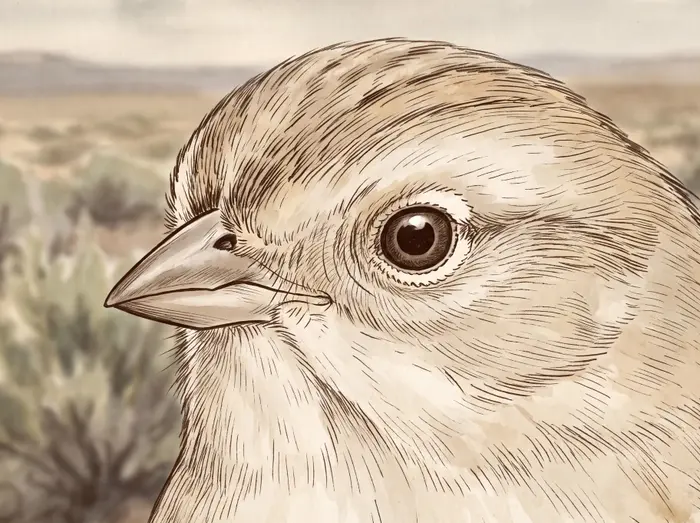
Brewer's sparrow
Spizella breweri
The plainest sparrow there is, and here only for winter. It barely drinks, going weeks on a dry seed diet, and saves its long, canary-ish song for the northern sagebrush where it breeds.
Read more →
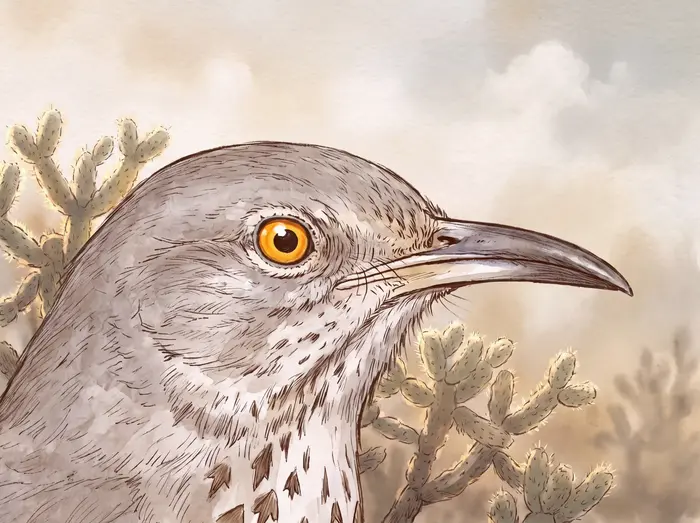
Curve-billed thrasher
Toxostoma curvirostre
A Sonoran bird in the wrong desert. Seen here in August, well northwest of where the books put it. Orange eye, sickle bill, and a call that arrives before the bird does.
Read more →
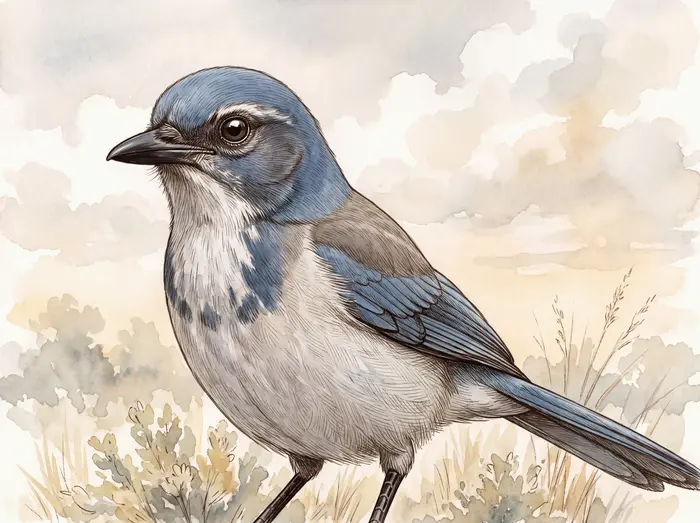
Woodhouse's scrub-jay
Aphelocoma woodhouseii
A pinyon-juniper bird about a thousand feet below its book, standing on open bajada. Nothing else in this guide is blue, so the question is where, not which.
Read more →
Woodpeckers
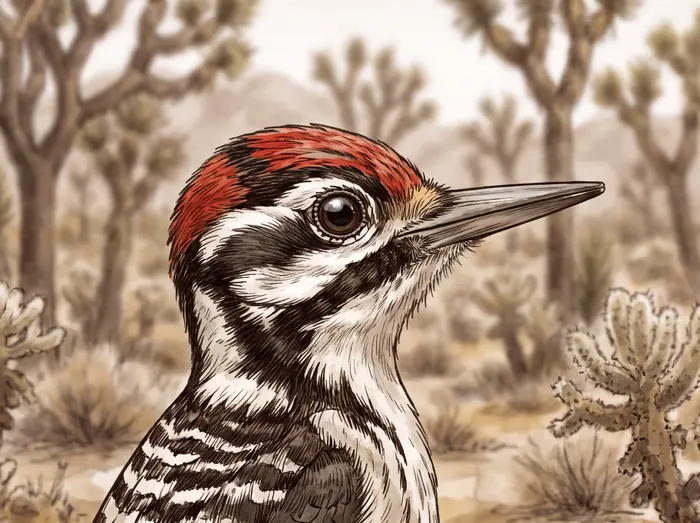
Ladder-backed woodpecker
Dryobates scalaris
A woodpecker must chisel its own nest, and almost nothing in this desert is soft enough. The Joshua tree, a giant yucca, is the answer; its range and the tree's lie nearly on top of one another.
Read more →
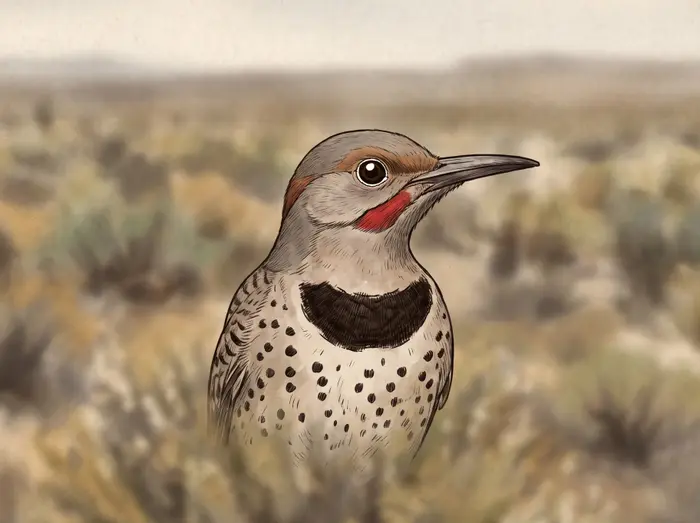
Northern flicker
Colaptes auratus
The woodpecker that came down off the bark to eat ants on the ground, probably more ants than any bird on the continent. Here it is a cool-season visitor from higher country, not a nester.
Read more →
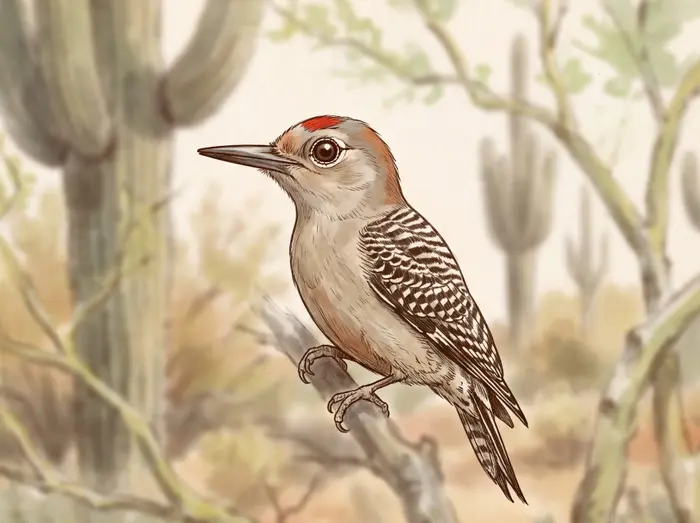
Gila woodpecker
Melanerpes uropygialis
A desert woodpecker that drills the nest holes half the neighborhood reuses, a queue of birds that cannot dig their own. Here it's a daily bird, at the far northern edge of its range.
Read more →
Hummingbirds
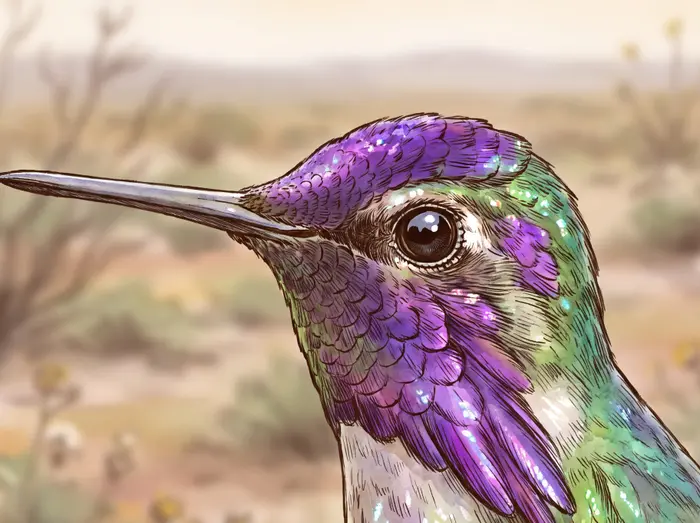
Costa's hummingbird
Calypte costae
His dive whistle is made by his tail, not his voice. He twists half of it up to 90° to aim the sound, and passes to her side so she can't hear how fast he flies.
Read more →
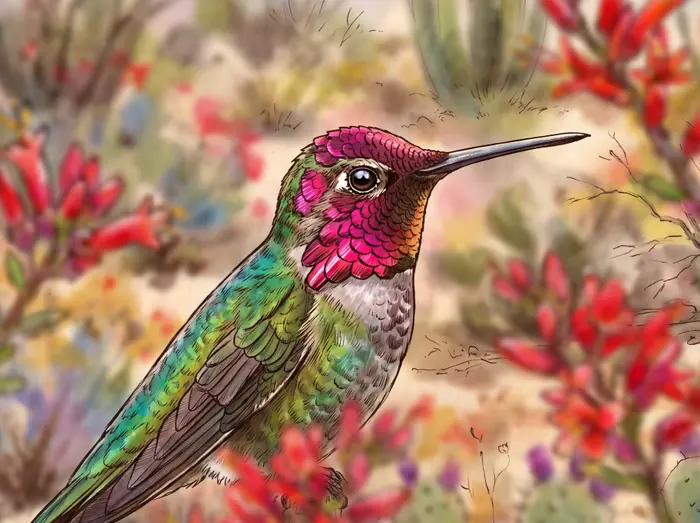
Anna's hummingbird
Calypte anna
A recent, feeder-helped arrival, not a desert native. The chirp at the bottom of a male's dive isn't his voice but one fluttering tail feather, a 150-year mistake.
Read more →